Complete Guide to Shopify SEO in 2025
Learn everything you need to know about optimizing your Shopify store for search engines in 2025. From technical SEO to content strategy, this guide covers it all.
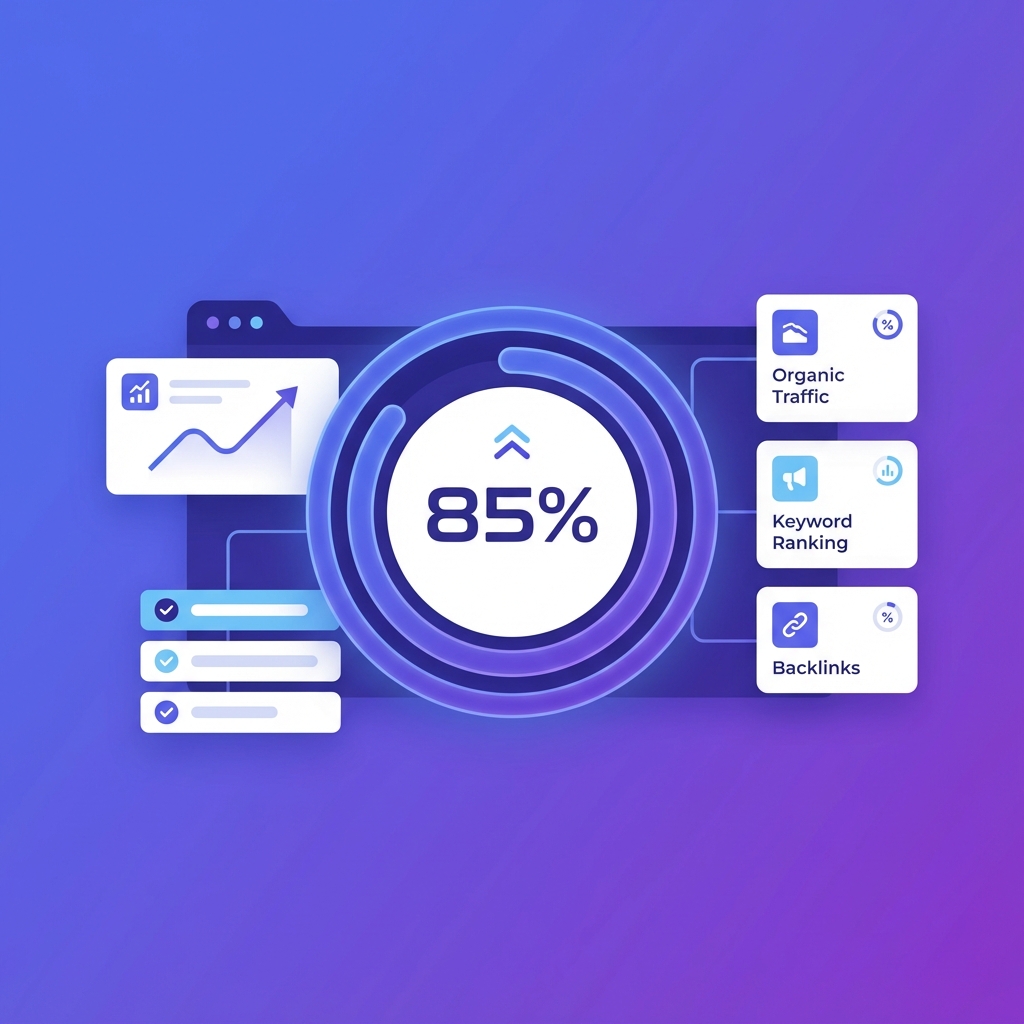
Search engine optimization (SEO) is crucial for any Shopify store looking to attract organic traffic. In this comprehensive guide, we’ll cover everything you need to know to rank higher in 2025.
Why SEO Matters for Shopify Stores
Organic search remains one of the most valuable traffic sources for e-commerce stores. Unlike paid advertising, organic traffic doesn’t require ongoing ad spend, making it a cost-effective way to grow your business.
Key benefits of SEO for Shopify:
- Sustainable, long-term traffic growth
- Higher trust and credibility with customers
- Lower customer acquisition costs over time
- Improved brand visibility
Technical SEO Fundamentals
Site Speed Optimization
Google considers page speed as a ranking factor. Here’s how to optimize your Shopify store:
- Compress images - Use WebP format and lazy loading
- Minimize apps - Remove unused apps that add JavaScript
- Use a fast theme - Choose themes optimized for performance
- Enable browser caching - Shopify handles this automatically
Mobile-First Design
With over 60% of e-commerce traffic coming from mobile devices, your store must be mobile-friendly:
- Test your store on multiple devices
- Ensure buttons are easily tappable
- Keep forms simple and mobile-optimized
- Use responsive images
URL Structure
Clean, descriptive URLs help both users and search engines:
✅ Good: /products/organic-cotton-t-shirt
❌ Bad: /products/prod-12345-variant-abc
On-Page SEO Best Practices
Title Tags
Your title tag is one of the most important on-page SEO elements:
- Keep titles under 60 characters
- Include your primary keyword near the beginning
- Make titles compelling and click-worthy
- Include your brand name at the end
Example:
Organic Cotton T-Shirt - Sustainable & Soft | YourBrandMeta Descriptions
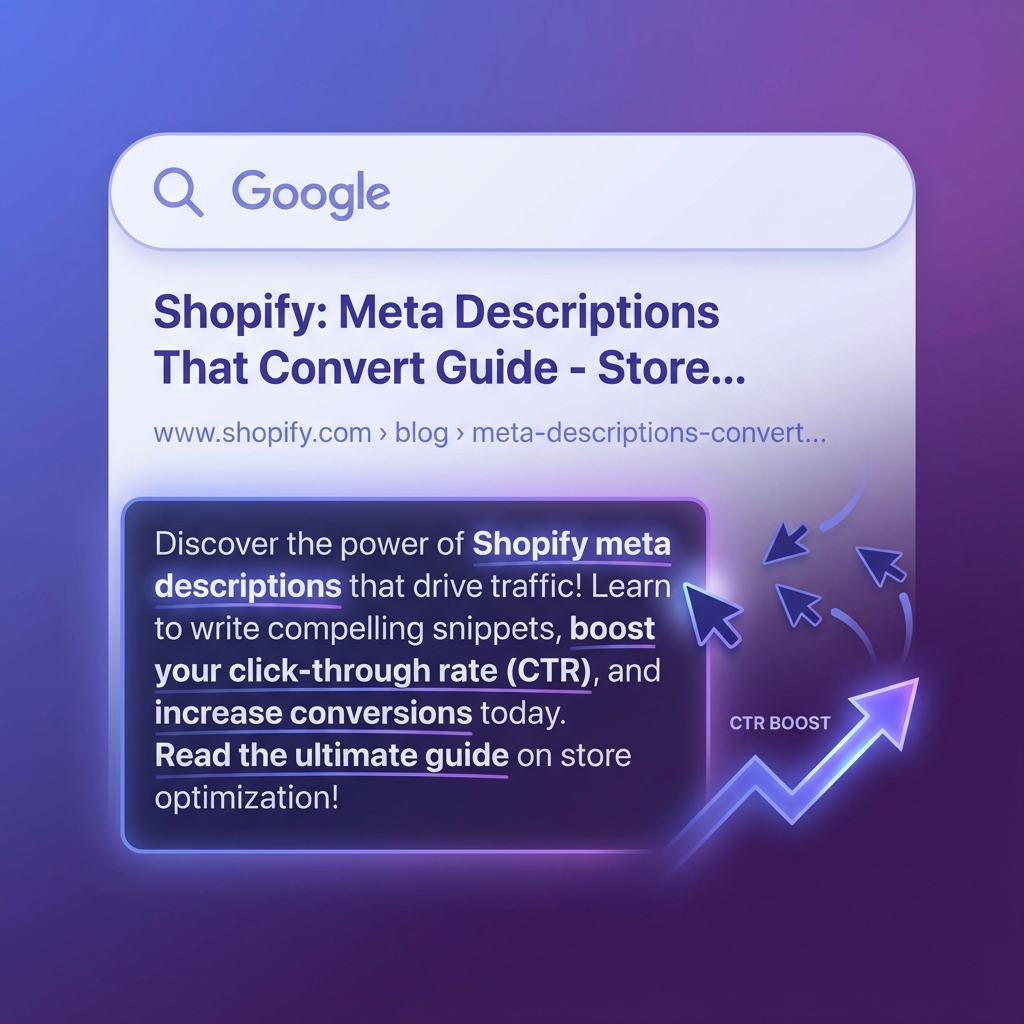
While not a direct ranking factor, meta descriptions affect click-through rates:
- Keep descriptions under 160 characters
- Include a call-to-action
- Mention key product benefits
- Use your target keyword naturally
Product Descriptions
Unique, detailed product descriptions are essential:
- Write at least 300 words per product
- Include primary and secondary keywords
- Address customer questions and concerns
- Use bullet points for key features
- Add structured data for rich snippets
Content Marketing Strategy
Product-Related Blog Posts
Create content that helps customers make purchasing decisions:
- “How to Choose the Right [Product Type]”
- “X Ways to Use Your [Product]”
- “Complete Buying Guide for [Product Category]“
SEO-Driven Content Calendar
Plan your content around seasonal trends and keyword opportunities:
- Research keywords using tools like Ahrefs or SEMrush
- Identify content gaps in your niche
- Create a publishing schedule (2-4 posts per month)
- Update old content regularly
Image SEO
Images are often overlooked but crucial for e-commerce SEO:
Alt Text Optimization
Every image should have descriptive alt text:
✅ Good: alt="Women's organic cotton t-shirt in navy blue"
❌ Bad: alt="product-image-1" or alt=""
Image File Names
Use descriptive file names before uploading:
✅ Good: organic-cotton-tshirt-navy.jpg
❌ Bad: IMG_12345.jpg
Local SEO for Physical Stores
If you have a physical location:
- Set up Google Business Profile
- Encourage customer reviews
- Add local schema markup
- Include local keywords in content
Measuring SEO Success
Track these key metrics:
- Organic traffic - Google Analytics
- Keyword rankings - SEMrush or Ahrefs
- Conversion rate - Shopify Analytics
- Page speed - Google PageSpeed Insights
- Core Web Vitals - Google Search Console
Tools for Shopify SEO
Essential Tools
- Google Search Console - Free, essential for monitoring
- Google Analytics 4 - Track traffic and conversions
- Shopify Store Assistant - Automated SEO auditing and scoring
Advanced Tools
- Ahrefs - Keyword research and backlink analysis
- SEMrush - Comprehensive SEO suite
- Screaming Frog - Technical SEO auditing
Common SEO Mistakes to Avoid
- Duplicate content - Use canonical tags properly
- Ignoring mobile - Test on real devices
- Thin product descriptions - Add unique, detailed content
- Missing alt text - Optimize all images
- Slow page speed - Regularly test and optimize
Conclusion
SEO is a long-term investment that pays dividends over time. By implementing the strategies in this guide, you’ll be well on your way to ranking higher and driving more organic traffic to your Shopify store.
Ready to take your SEO to the next level? Start your free trial of Shopify Store Assistant and get automated SEO auditing with actionable recommendations.